
Overcome Challenging Soil - Huff Farms
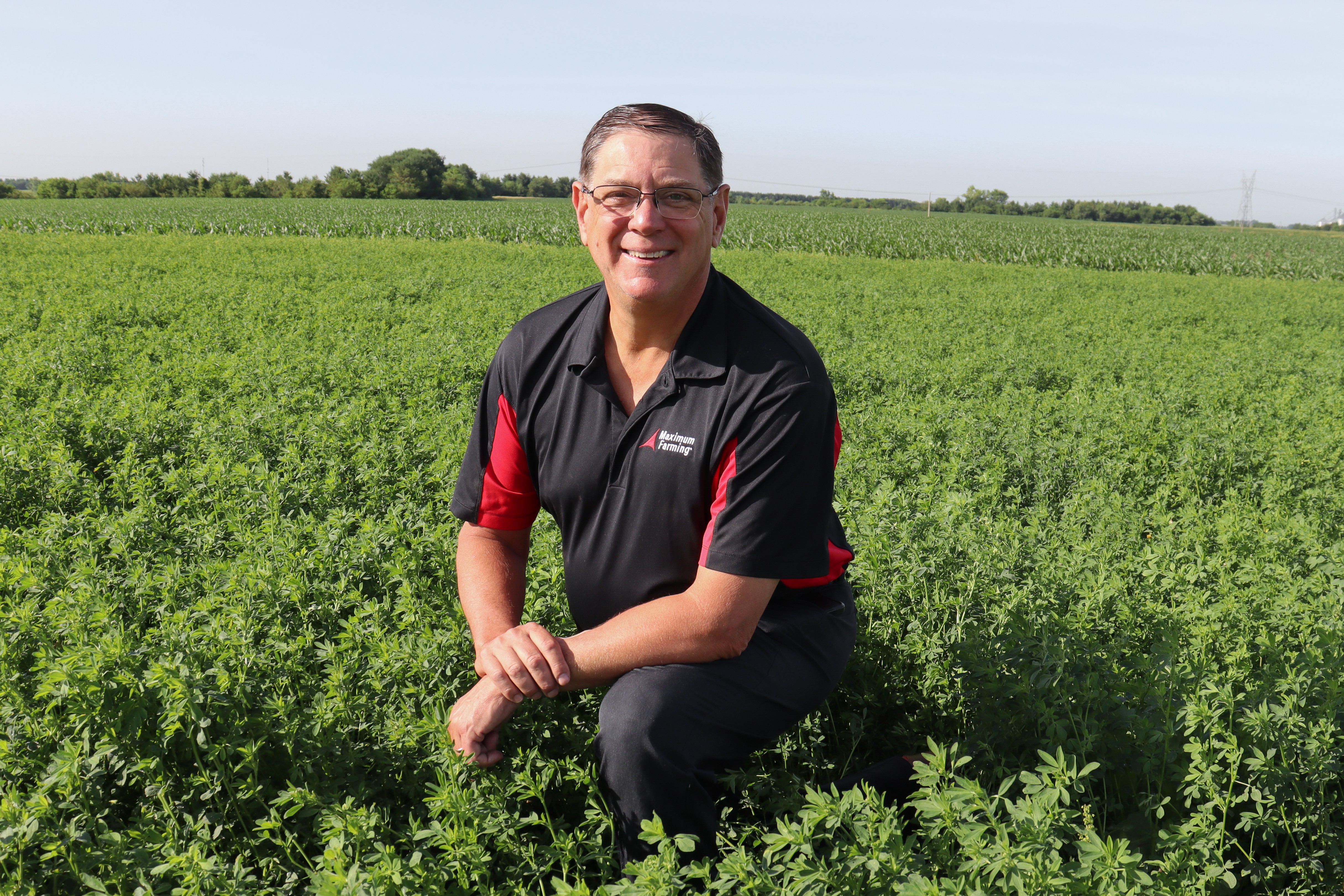

Most farmers farming low‑CEC, sandy soils know the drill: apply heavy potash, apply phosphorus to cover removal, and hope the crop can access enough to make a respectable yield. For much of his early farming career, Kyle Huff of Coldwater, Michigan, thought the same way. He trusted what he was told, followed traditional fertility programs, and assumed poor‑performing soils were simply a limitation he’d always live with.
But 2014 changed everything.
A Year that Forced a Rethink
Heavy spring rains washed out significant nitrogen, pushing yields to disappointing lows. “It was just kind of a bad fertilizer decision,” Kyle recalls. “The yields were horrible.” When he connected with Brad Love, an Ag Spectrum Area Manager, he was introduced to an entirely new way of thinking; one that focused on nutrient timing, plant biology, and efficiency instead of blanket fertilizer applications.
“When he explained the science, it clicked,” Kyle said. “I realized I’d been relying on what the agronomist told me, whether it was true or not.”
Attention to Detail Meets a System Built on the Details
Brad immediately noticed Kyle’s curiosity and openness to change. That mattered because the Maximum Farming System® depends on managing many small details: fertility placement, planter configuration, nutrient timing, and biological activation. Kyle committed to the approach and made key updates to his planter to ensure proper placement and rate control.
That first season returned a dramatic payoff.
Switching to in‑furrow Clean Start® phosphorus transformed the early crop. “The corn took off that first year. It was that much difference in height, and the ear fill was unlike anything I’d seen.”
Winning Yields on Soil No One Expected to Perform
Kyle’s soils are the kind most experts consider limiting - very sandy, coarse, low single‑digit CEC, low organic matter. Yet three years after adopting the System, Kyle won the NCGA Michigan No‑Till Irrigated Yield Award with a 296‑bushel corn crop.
Even his seed rep didn’t believe the results.
“He came out and said, ‘I’ve gotta see your soil samples. I need to know what kind of soil grows 296 bushel.’ I told him: there’s nothing special. It’s just the System.”
More Than Yields
Since adopting the Maximum Farming System, Kyle has:
Increased average corn yields from ~175 to ~220 bu/acre
Raised soybeans from 45–50 to 60–65 bu/acre
Maintained stable soil tests for over a decade
Greatly reduced whole‑farm dry fertilizer applications
Improved nutrient efficiency through biology and timing
Eliminated wasted fertilizer through precise planter setup
Even local farmers renting his ground were surprised. They expected soil depletion, but soil tests came back showing more than adequate nutrient levels. The misconception that “efficiency equals mining” simply wasn’t true.
A System that Works Year After Year
Kyle’s success is rooted in consistency.
“You stick with it, and you continue to see your yields improve over time,” he says. “When you know the plant’s needs and you know the science, you stick with it.”
Today, Kyle’s farm is proof that the right system can unlock yield potential even where most people doubt it exists. Real results, backed by real science, delivered by a farmer who pays attention to the details that matter.
Want to learn more?
Watch the video below about Huff Farms


