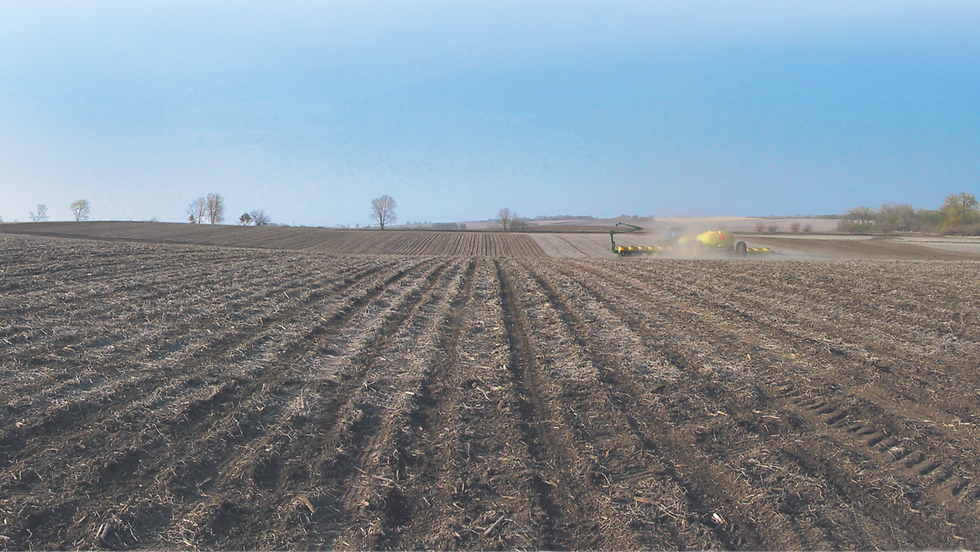
Residue Management Starts this Fall


Managing residue cover is critical to maintaining soil biology over winter and preparing the soil for timely planting next spring. Farmers' decisions in the fall significantly impact how quickly residues degrade, how much carbon is retained in the soil, and how quickly soils can warm in the spring.
Physical disruption of crop residues as they come through the combine or afterward using shallow tillage will accelerate decomposition. But in certain situations, especially drier environments and continuous corn, such practices are not enough to optimally reduce residue cover to levels compatible with spring planting.
Certain inputs that can further accelerate decomposition include a wide assortment of products that add one or more components needed for residue breakdown: water, mineral nutrients, chemical energy (e.g., soluble carbon), and catalysts (e.g., enzymes, fermentation products, or microbes). While many options are available to growers, a few stand out as particularly cost-effective.

Fall manure applications, particularly surface-applied liquids, provide all necessary components and will act most quickly and completely to reduce residue cover.
For those not using fall manures, a spray containing Ag Spectrum products Blitz® and GroZyme®, combined with UAN, will also jump-start decomposition quite effectively. The GroZyme acts to increase residue surface area and the UAN supplies soluble N, the element that is most limiting to natural microbial activity in crop residues. Contact your local Maximum Farming System representative to discuss optimum rates of this spray mix.
Optimal residue management will differ somewhat among farms, but it is generally a good practice to aim for 30 to 60% residue cover by the time of planting: more on lighter, drier soils and less on heavier, wetter soils. By paying attention to residue management, farmers can help ensure optimal surface cover and spring soil moisture retention for their soils.