Optimizing Soil Health Management with The Maximum Farming System

Sustainable and abundant crops are dependent on healthy soils. Unfortunately, there are no silver bullet solutions that will create optimal soil health on all farms. Differences in land, equipment, labor, and local cropping conditions require farmers to fine-tune their soil health management strategies. Nonetheless, careful study of the fundamentals of soil science reveals the nature of soil health and how to improve it. The Maximum Farming System builds on that scientific foundation to improve all aspects of soil quality, thereby allowing customers to succeed regardless of local conditions.
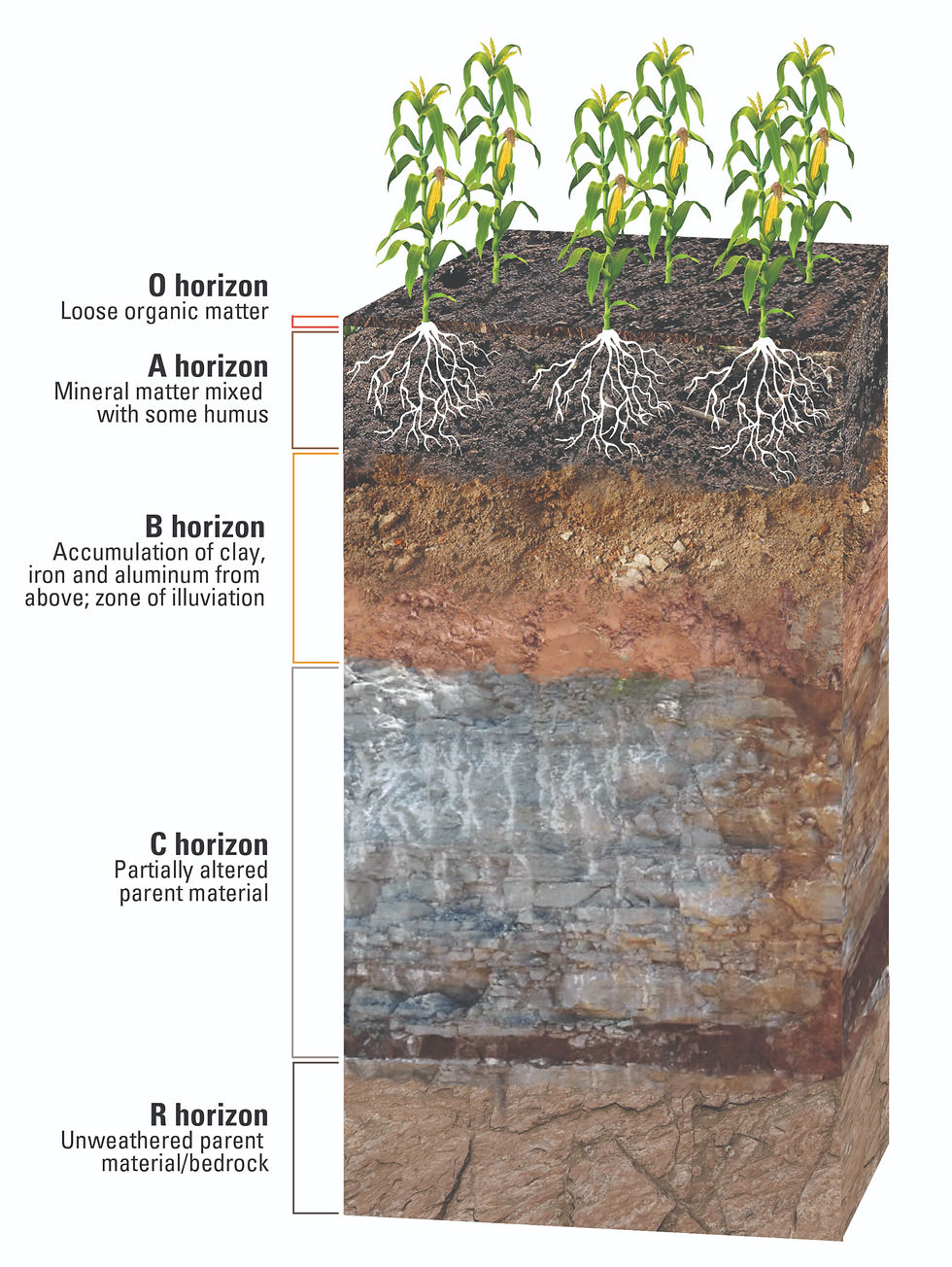
To provide some context on how that is accomplished, first consider the different layers of soil (Figure 1). On the surface, crop residues contribute to water retention, erosion control, and carbon cycling in the organic “O” horizon. Crop roots grow largely within the A horizon, where managing the balance of air, water, and nutrient availability is a critical point of concern. Roots can extend further down into the B horizon, especially in drier areas, to access soil water, but their growth is frequently restricted by the lack of oxygen and elevated levels of aluminum and other transitional metals in this zone. It is for this reason that the volume and combined properties of the top three horizons of a soil are critical to determining the amount of active root growth, the associated amount of shoot growth, and, ultimately, harvestable yield that can be developed over the course of a growing season. So, what exactly is soil health and how do we manage it successfully?
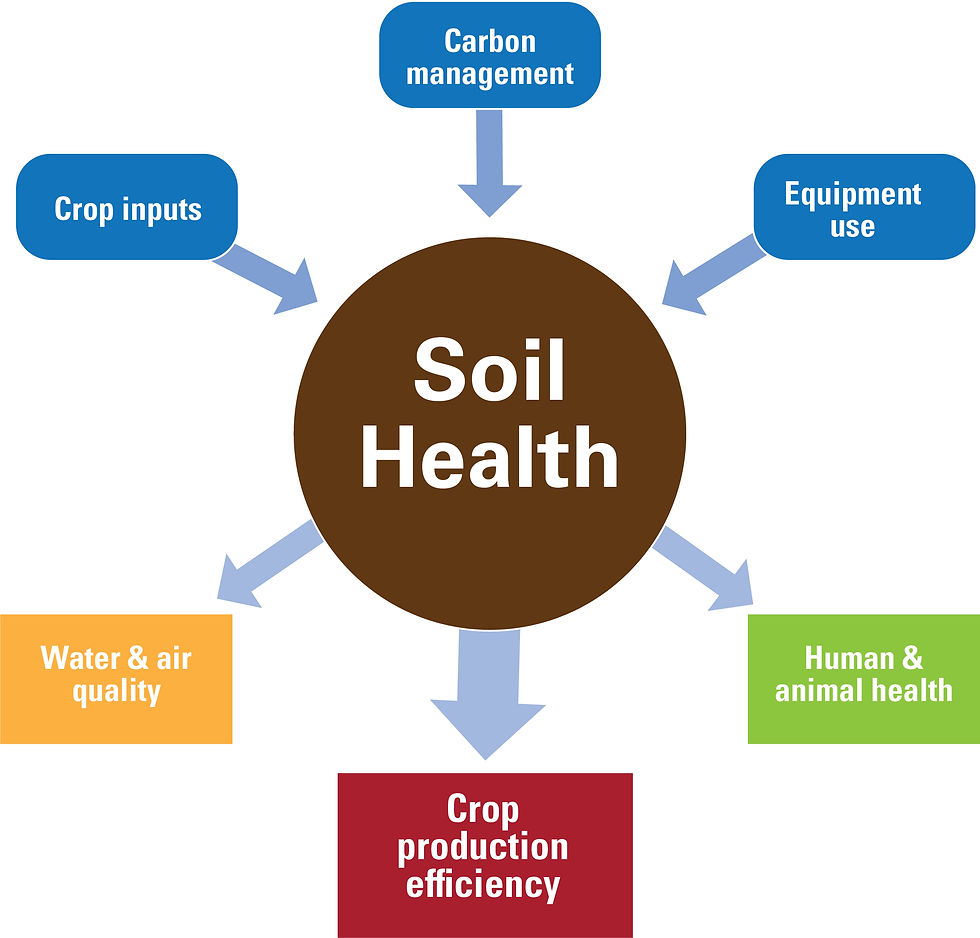
Just as human health emerges from the combined states of one’s body, mind, and spirit, soil health is a multidimensional and dynamic property of land. It is responsive to the weather and management, and it emerges from the interactions of the physical, chemical, and biological properties of soils. Because the soil is a living system, its health should be a central concern of landowners and farm managers. In fact, soil health is central to understanding how management influences outcomes on the farm (Figure 2). Farmers influence soil health by applying crop inputs and managing soil carbon pools with specialized equipment to complete required farm operations. And, like any process, soil health management leads to different outcomes, including changes in water and air quality, human and animal health, and, most important of all, crop production efficiency. By focusing on these different outcomes, soil health can be viewed as the nexus of all management decisions, the outcomes of which define one’s success as a steward of the land. Ag Spectrum is committed to improving our customers’ success by increasing their capacities to improve soil health on their farms.
To positively impact soil health, Ag Spectrum associates know that all material inputs must be applied according to the 5Rs of fertilization (right product, right form, right rate, right timing, and right placement). By doing so, the beneficial effects of such materials can outweigh the potential negative effects they can have on one or more soil properties (Table 1 below). Too often, conventional growers make the mistake of thinking that “if a little bit is good, more will be better.” However, that type of thinking not only leads to wasted input dollars, it can also lead to unwanted changes in soil quality that negatively impact crop productivity. For instance, overapplications of potash and lime lead to changes in soil chemistry that can increase soil crusting and reduce oxygen availability in the root zone. Overapplication of pesticides, too, can lead to unintended negative effects on crop growth directly and indirectly. And, consistent with the adage that one can get too much of a good thing, even irrigation water can negatively impact soil chemical and biological properties, if not done properly. By focusing on the nature of the materials used and the processes they influence, farmers can successfully integrate their inputs into an effective system of management.
Table 1: Input | Intended Positive Effects | Potential Negative Effects |
|---|---|---|
Fertilizers |
|
|
Pesticides |
|
|
Irrigation |
|
|
Similarly, how growers use farm machinery to disrupt the soil, apply inputs, plant seed, and harvest their crops can also influence soil health in intended as well as unintended ways (Table 2 below). Factors such as the weight, frequency of use, and timing of operations relative to soil structure and moisture content will determine if an operation experiences a net positive or net negative impact on soil health and crop production efficiency from year to year. Proper, and timely, maintenance and calibration of equipment also are essential to effective use of the machinery of modern agriculture, ensuring that the work that is done and the data that are collected contribute to efficient crop management. Ag Spectrum associates help their customers prepare for operations by reviewing key operating procedures through a series of annual Service Checks, encouraging timely adoption of the most useful technologies, and helping our customers make the most of the capital investments they have made.
Table 2: Use Factor | Key Considerations | Potential Negative Effects |
|---|---|---|
Weight and Frequency |
|
|
Timing |
|
|
Maintenance/Calibration |
|
|
The final frontier for improving soil health lay in the realm of optimizing carbon management. This includes thoughtful consideration of the intended positive effects and potential negative consequences of various practices that affect soil carbon pools
(Table 3 below). Plant roots and post-harvest residues are the largest source of carbon that affect soil quality. So, management practices that affect the types, forms, amounts, timing, and incorporation of plant material will have the greatest impact on soil health. In addition to cropping choices, residue management, tillage, and weed control practices all affect carbon cycling in significant ways by changing different soil properties.
Table 3: Practice | Intended Positive Effects | Potential Negative Effects |
|---|---|---|
Residue and Cover Crops |
|
|
Tillage |
|
|
Weed Management |
|
|
Farmers should also consider the costs and benefits of various carbon-containing inputs such as lime, manure, and composts (Table 4 below). Optimal use of carbon inputs involves consideration of how local cropping conditions influence the selection of the proper products and forms, as well as the appropriate rates, timing, and placement of each. Ultimately, growers need to understand that the optimal approach to carbon management will be farm-specific. The availability of different inputs as well as seasonal norms for precipitation and temperature will largely determine which carbon management tools will be most cost-effective for any given farm.
Table 4: Input | Intended Positive Effects | Potential Negative Effects |
|---|---|---|
Lime |
|
|
Manure |
|
|
Compost |
|
|
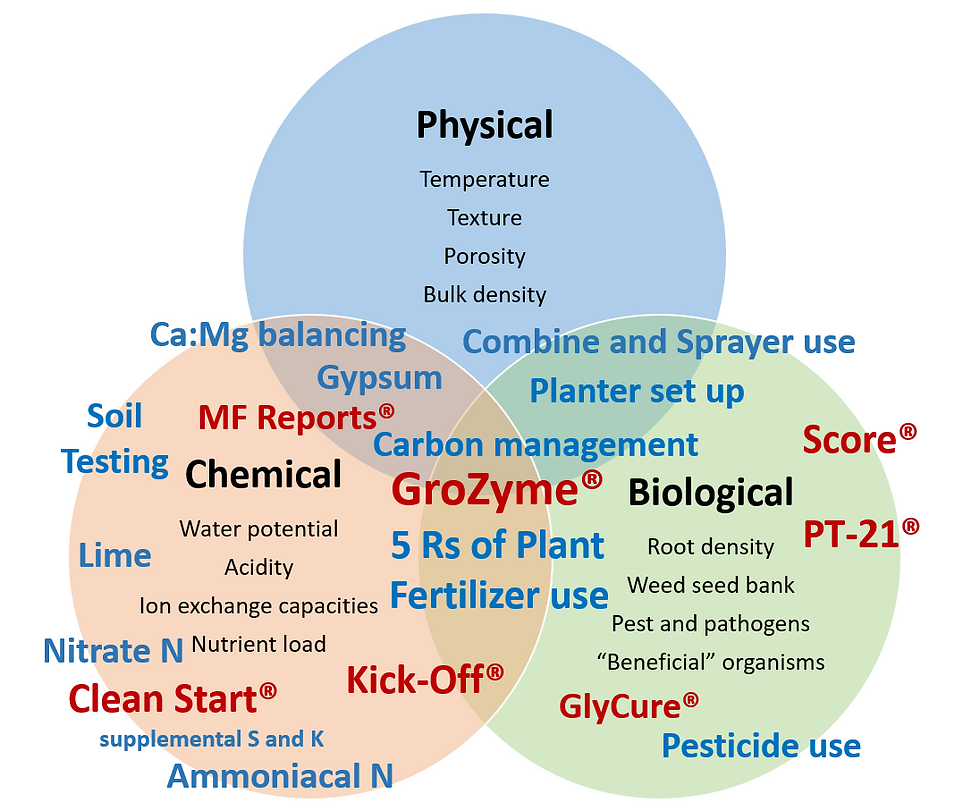
Ultimately, the health of a soil is most meaningfully assessed based on its ability to produce marketable yield per unit of farmer input under varied growing conditions. Because all inputs and management practices have some trade-offs, growers need to do more than just determine if a product or practice will work in isolation. They need to be sure that all their choices work together as an efficient system to achieve the desired result of producing healthy, abundant, and sustainable harvests year after year. Ag Spectrum’s associates help customers navigate those complexities and improve soil health by providing high-quality products and science-based recommendations that positively impact the physical, chemical, and biological properties that define soil health (Figure 3). Using a system of timely service checks and uniquely formulated products, our Dealers provide farmers the tools needed to improve soil health, crop productivity, and operational profitability. Since 1984, farmers using the Maximum Farming System have proven that one can improve soil health, increase crop productivity, and maximize profitability year after year.